Photoelectrochemical processes for a sustainable energy system
Our focus is on the development, investigation and application of photoelectrochemically active materials and processes. The main focus is on application scenarios in the field of antibacterial and self-cleaning surfaces as well as the photoelectrochemical extraction of lithium from seawater and brines. Sol-gel synthesis and mechanical and mechanochemical processes in combination with spin and dip coating are used as manufacturing methods for photoactive materials and thin films for coating substrates. The samples are characterised using photoelectrochemical methods such as photoelectrochemical impedance spectroscopy, linear sweep voltammetry, chopped light amperometry and potentiometry, as well as intensity-modulated photocurve and photovoltage spectroscopy.
- self-cleaning surfaces
- lithium extraction from seawater and brines
Photoelectrochemical characterisation of thin films using photoelectrochemical impedance spectroscopy, linear sweep voltammetry, chopped light amperometry and potentiometry, as well as intensity-modulated photocurve and photovoltage spectroscopy
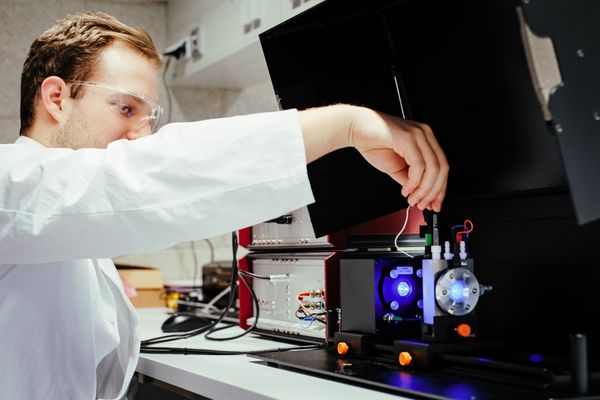
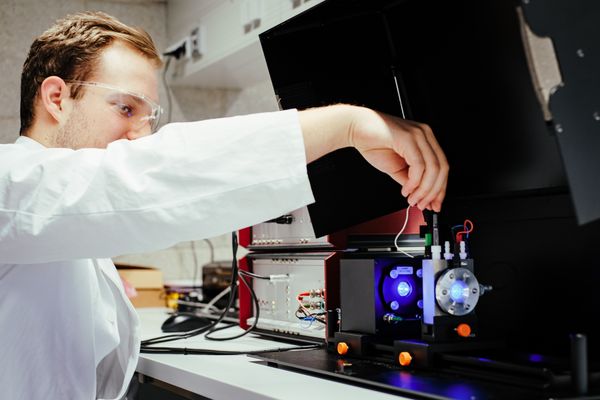
- Measuring cells and electrochemical workstation for photoelectrochemical characterisation of photocatalysts and thin films
- Various light sources in the UV and visible range of the spectrum, including solar simulator
- Coating methods (spin and dip coaters)
- UV-Vis spectrometer
Photoelectrochemical and photocatalytic characterisation of powders and thin films
Research Projects