High-Temperature PEM Fuel Cells and Electrochemical Hydrogen Pumps
The higher operating temperatures of 160 °C to 200 °C in high-temperature PEM fuel cells offer several advantages over conventional PEM fuel cells. These include increased tolerance to impurities in the hydrogen, as well as simplified water management and cooling systems. The electrochemical hydrogen pump, whose system is based on a PEM fuel cell, purifies and compresses hydrogen in a single process step, promising high efficiency.
The goal of our research is to improve the performance, efficiency, and service life of these systems through targeted material selection, design changes, and optimized operational management. To this end, we are testing new binding materials that are stable at higher temperatures and have high proton conductivity. We are also testing membranes that enable better electrolyte/acid distribution in the cell.

- use in stationary energy supply
- and in the mobility sector in heavy-duty applications, for example in trains, trucks, or ships
- Evaluation of the performance of high-temperature PEM fuel cells and electrochemical hydrogen pumps using electrochemical impedance spectroscopy (EIS)
- Analysis of impedance data using relaxation time distribution (DRT analysis)
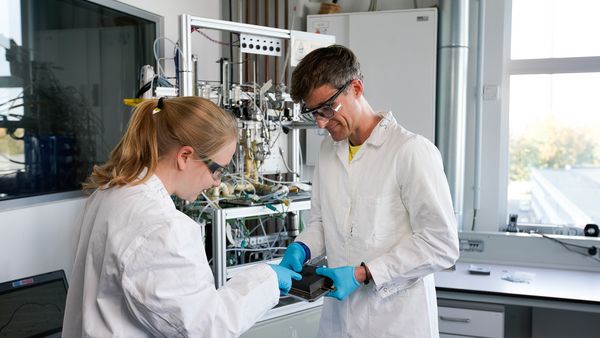
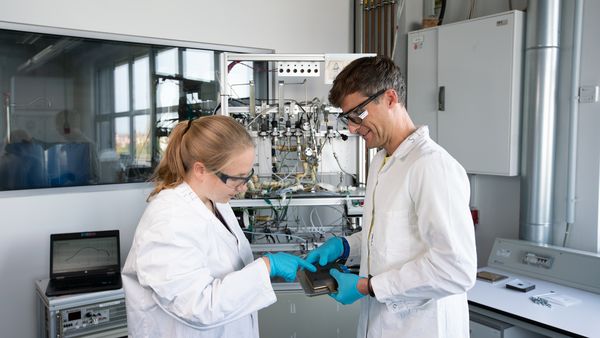
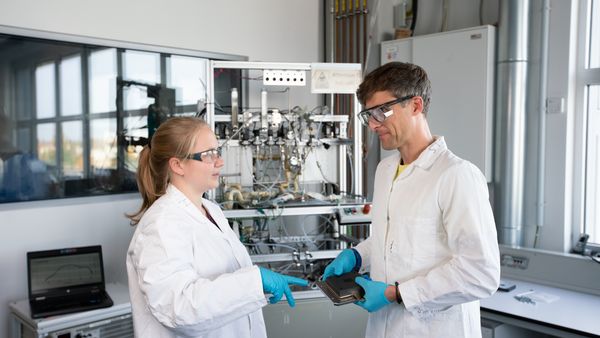
- Teststand: paralleler Betrieb von 2 Zellen (aktive Fläche 4 cm²) als Brennstoffzelle oder Pumpe bei Temperaturen bis 200 °C
- Potentiostaten für die elektrochemische Charakterisierung von (Halb-)Zellen, z.B. elektrochemische Impedanzmessung (EIS), Zyklische Voltammetrie (CV)
- Equipment zur Herstellung von Gasdiffusionselektroden (max. 25 cm²)
- Rotierenden Scheibenelektrode (RDE) zur fundamentalen elektrochemischen Charakterisierung von Katalysatoren
- Gaschromatograph zur Analyse der Reinheit von Wasserstoff
- Voll- und Halbzelle zur Charakterisierung von Elektroden für die VRFB, inklusive Messung der Druckverluste in der Elektrode
- Evaluierung von Zellen und Zellkomponenten
- Herstellung von Membran-Elektroden-Einheiten und Gasdiffusionselektroden