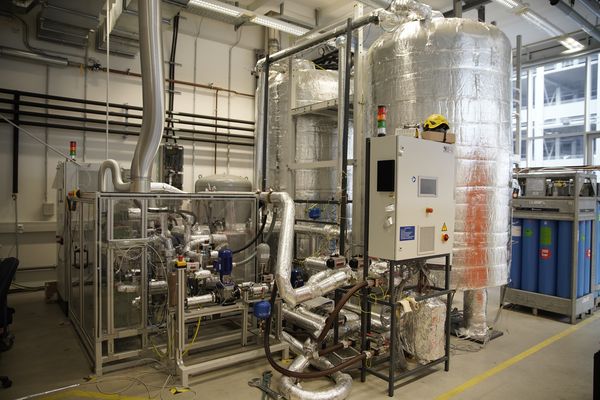
Thermal and Chemical Energy Storage Systems
Storing large amounts of renewable energy is one of the key challenges of the energy transition. Thermal and thermochemical energy storage systems convert electrical energy into heat or chemically bound energy and make it available again when needed—as electricity, heat, or in the form of green molecules. The various storage technologies each offer different advantages. While thermal storage systems enable simple sector coupling and cost-effective, scalable storage capacity, chemical energy storage systems offer large storage capacities with high energy density as well as long-term storage.
A particular focus of the research is on the production of CO₂-free energy carriers such as synthetic natural gas (SNG), on the use of biomass for energy, and on methods for capturing and storing CO₂, for example from industrial processes or directly from the atmosphere. In this way, the research field contributes to advancing a CO₂-free energy supply through technologies for energy storage, material conversion, and CO₂ capture.

- Balancing fluctuations in renewable electricity generation through storage technologies
- Energy utilization of biomass
- Thermochemical conversion and synthetic natural gas (SNG) production
- Sector coupling (electricity, heat, and gas)
- Decarbonization of the lime and cement industries
- CO2 capture from ambient air (Direct Air Capture)
- Simulation and experimental investigation of Carnot batteries (reversible heat pump-ORC processes)
- Carbonate looping processes as chemical energy storage systems
- Storage/capture of process-related CO2 emissions from lime and cement production
- Concepts for capturing CO2 from the atmosphere (Direct Air Capture)
- Production of hydrogen-rich synthesis gases through allothermal gasification of biomass and other solid fuels
- Production of CO₂-free SNG (synthetic natural gas) in 3D-printed reactors
Catalytic and biological methanation - Decentralized and efficient utilization of biomass through combustion and gasification
- Pilot plants of various capacities for biomass combustion and gasification, Carnot batteries, catalytic and biological methanation, catalytic reforming, gas control loops and reactor test benches, carbonate storage, calciners, plasma gasifiers, SOFC test bench
- Laboratory infrastructure for fuel and tar analyses
- Gas analysis (gas analyzer, gas chromatograph, micro-GC, particulate matter, flue gas analyzer)
- Tar analysis
- Thermogravimetric analysis (TGA)
Research Projects
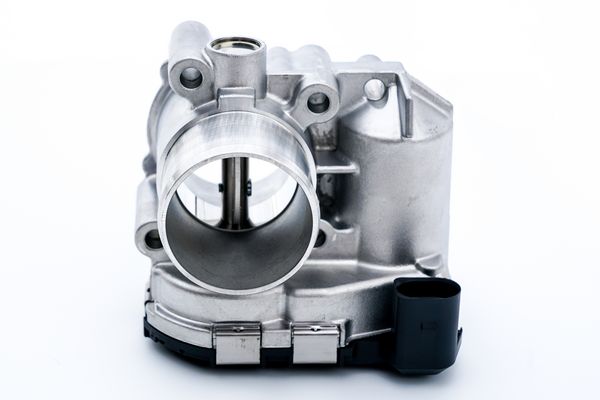
CarbonNeutralLNG
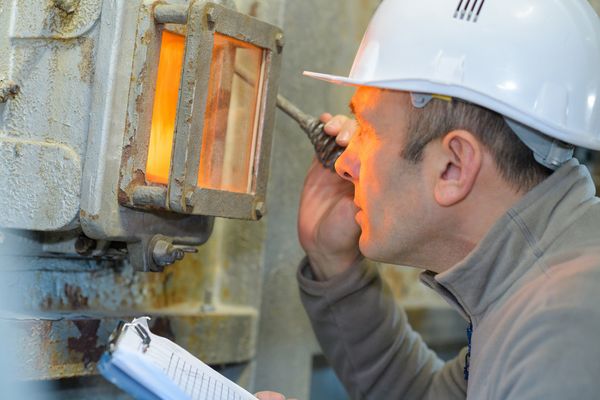
CarbonateClusters