RealEnergy
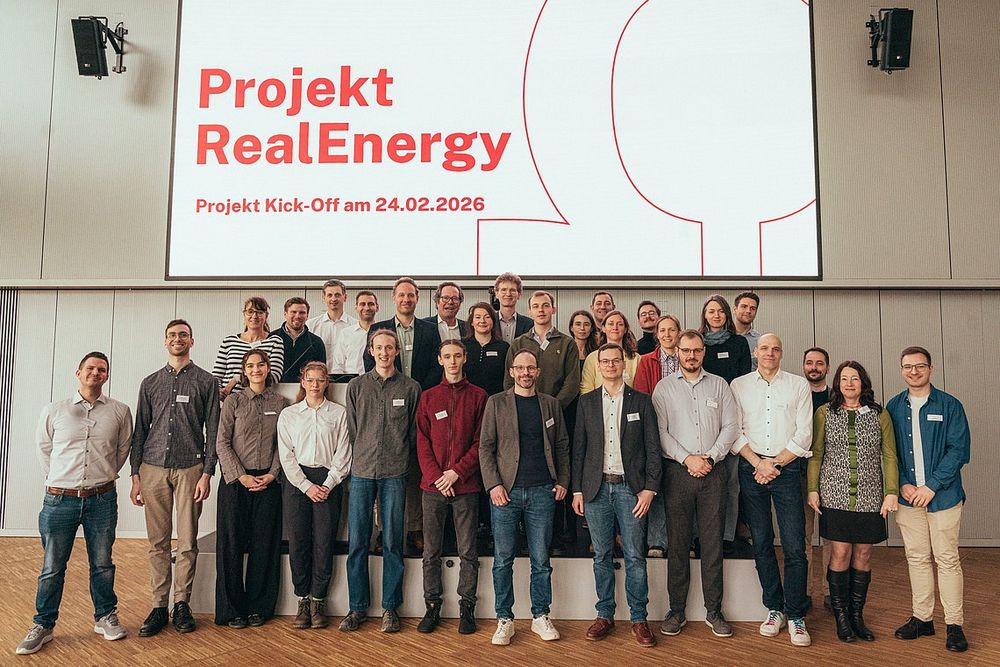
Bild: Felix Zeiss
The RealEnergy project combines the establishment of a miniature real-world laboratory for H2 technologies—where cutting-edge research is conducted—with a comprehensive education and training program designed to inspire high school students, college students, and the general public to pursue technical degree programs and explore sustainable energy and H2 solutions. In Germany, there is an enormous need for highly qualified professionals in the energy and hydrogen sectors, as well as in industry and science. At the same time, enrollment in engineering programs—and particularly in the field of energy engineering—has been declining for years, due to both lower intake and high dropout rates. This poses a massive threat to achieving climate goals and the ramp-up of the hydrogen economy.
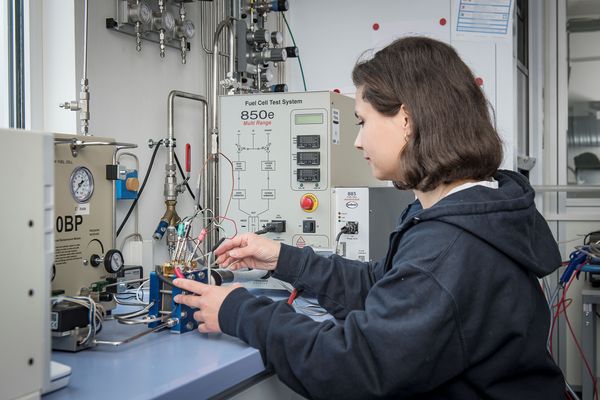
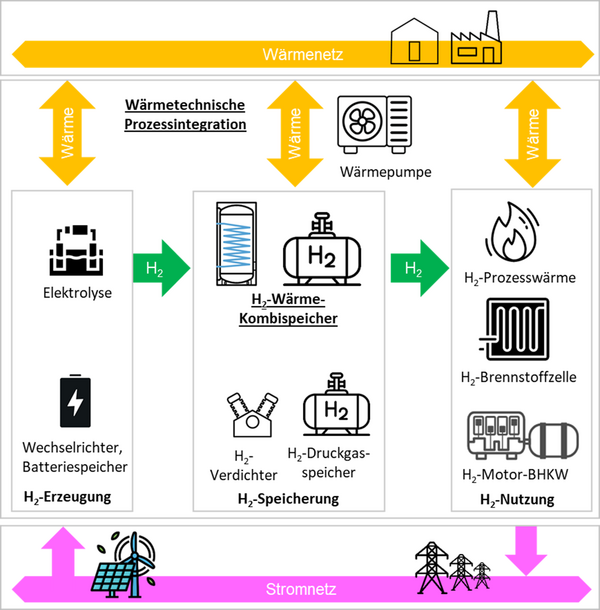
Currently, there is no opportunity anywhere in Germany for high school students and young college students to conduct independent experiments in the field of hydrogen (H2) and develop their own ideas in a realistic setting. A new miniature real-world laboratory called “Energy & Hydrogen” will therefore be established in the research space (Module 1). This serves as an open laboratory platform for both internal and external stakeholders, thereby forming a low-threshold link between schools, universities, industry, and society. A complete H2-based process chain will be established in this research lab, consisting of several interconnected subsystems for the production of H2 from solar power, as well as the storage and utilization of H2. All facilities in the research space are designed to enable research across a wide range of disciplines, including artificial intelligence for energy systems, electrical engineering, materials, process, and energy engineering, business administration, and sustainability.
Criticism of H₂ technologies to date has focused on their comparatively low energy efficiency, which stems from several loss-prone conversion steps throughout the entire value chain. This is where the research project (Module 2) comes in, with the goal of developing new approaches to reduce energy losses. On the one hand, a holistic analysis of H2-based energy conversion chains is being conducted, with a particular focus on full thermal integration into a new research building. On the other hand, an innovative chemical H2 storage system (“H2-heat combined storage”) is being developed and built as a key component, which in turn is fully integrated into the overall system from a thermal perspective. A cost-benefit analysis and research on technology acceptance round out the research project.
The training concept (Module 3) aims to utilize the miniature real-world laboratory for hydrogen technologies established as part of the project to create a comprehensive education and training program that raises awareness among research staff and students about the challenges associated with the transition to renewable energy and the use of hydrogen. The further development of a newly founded student Energy & Hydrogen Working Group (EW-AG) is intended to ensure the sustainable strengthening of science communication. This working group is open to students from all disciplines and universities, high school students, faculty members, and external stakeholders. It expands existing educational structures through new training and teaching concepts that prioritize peer-to-peer approaches. Sustainability and science communication, as well as public relations efforts by EW-AG members centered on the topic of energy and H2, strengthen the transfer of scientific knowledge to society. Through the public relations work initiated by the EW-AG, high school students are encouraged to pursue technical and scientific studies by interacting with the latest technology in a practical setting at an early stage and being able to implement their own ideas.


2025-2029
- Siemens Energy
- BAYERNOIL Raffinerieges. mbH
- MAN Truck and Bus SE
- N-ergie AG
- Envi Con Engineering GmbH
- Dürer Gymnasium Nürnberg
- Gymnasium Stein
- Willstätter Gymnasium Nürnberg
Federal Ministry of Research, Technology, and Space
Related Projects